

What is Pharmacogenomic Testing: A New Standard for Personalised Aged Care
For many older Australians, the daily routine of taking multiple tablets is a common reality, yet the way they affect the body can vary significantly from one person to the next. At Whiddon, we believe that understanding these differences is the key to providing truly dignity-led aged care.
Through an Australian-first pharmacogenomics (PGx) clinical trial, we are exploring how genetic insights can move us away from a traditional “one size fits all” approach to prescribing. By looking at the unique DNA of our residents, we are working to ensure that medication is safer, more effective, and tailored to the individual.
The Basics of Pharmacogenomics
Pharmocogenomics is an innovative field that combines pharmacology (the study of medicines) and genomics (the study of genes). Essentially, your DNA contains instructions for building proteins that determine how your body processes different medications.
Because our genetic makeup is unique, we all process drugs differently. By identifying our unique way of processing drugs through a simple test, prescribers can tailor the best type of medication and the right dose for each individual.
A Simple and Non-Invasive Process
One of the most significant benefits of pharmacogenomic testing is how easily it can be integrated into a resident’s daily routine. Unlike many traditional medical tests that may require blood samples or hospital visits, this process is entirely non-invasive. A simple swab is taken from the inside of the cheek and then sent for analysis by our research partners.
This ease of access is a vital part of our commitment to dignity-led care. Because the test is quick and comfortable, it allows us to gather essential biological insights without causing distress or disruption to a resident’s day.
Why This Matters for Aged Care
The need for a precise and personalised approach to medicine is particularly evident in aged care, where health needs are often complex. This precision is critical because older bodies often navigate unique changes and complex medication schedules that require careful oversight.
- Reducing Preventable Risks: Currently, over one million elderly take five or more regular medicines1, contributing to approximately 250,000 hospital admissions annually, of which two-thirds are believed to be preventable2.
- Improving Prescribing Safety: Research suggests that up to 50% of aged care residents may be prescribed medications that are potentially inappropriate for their specific needs3.
- Enhancing Daily Wellbeing: Over 90% of residents experience at least one medication-related problem, highlighting the vital need for an individualised approach to safety3.
By exploring potential genetic insights, this trial aims to reduce these risks and ensure that every aged care resident feels their best every day.
Leading the Way in Research
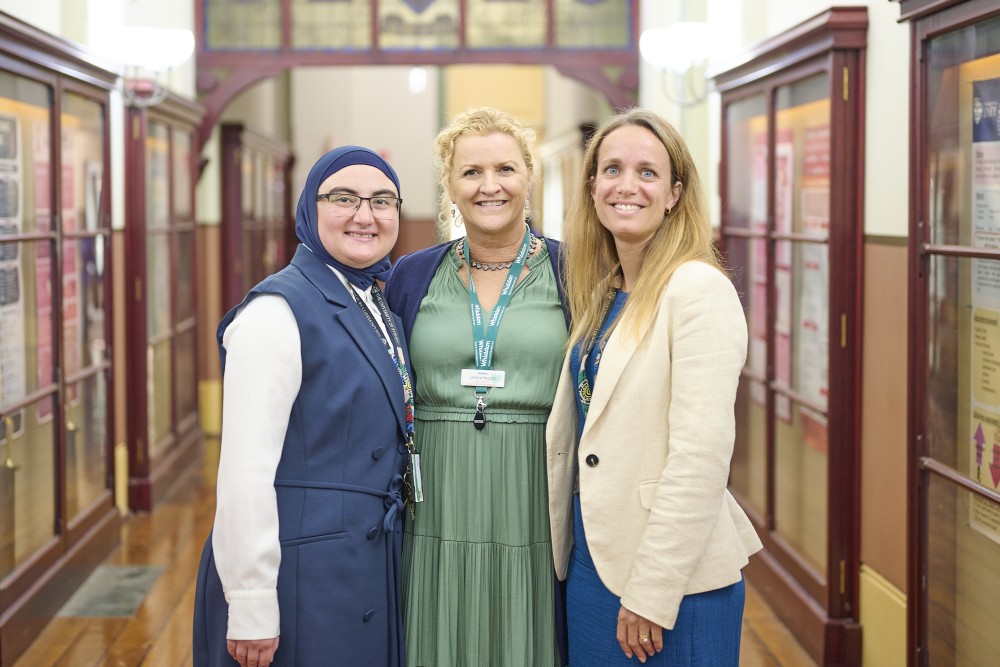
Pictured (L-R): Eman Wehbe (Lead Researcher, USYD), Jennie Hewitt (GM, Clinical Research & Reablement, Whiddon) and Assoc Prof Sophie Stocker (USYD)
Whiddon is proud to be at the forefront of this research, partnering with the University of Sydney, Monash University, myDNA, Choice Aged Care, and Embedded Health Solutions to lead this landmark trial. While its broader findings remain subject to peer-reviewed publication, we are dedicated to delivering care that is safer and more effective for our residents. For more information on this trial and its current progress, visit our PGx page.
References
- Page AT, Falster MO, Litchfield M, Pearson SA, Etherton-Beer C. Polypharmacy among older Australians, 2006-2017: a population-based study. Med J Aust. 2019;211(2):71-5.
- Lim R, Ellett LMK, Semple S, Roughead EE. The Extent of Medication-Related Hospital Admissions in Australia: A Review from 1988 to 2021. Drug Saf. 2022;45(3):249-57.
- Roughead, E., Semple, S. & Rosenfeld, E. 2013, Literature review: Medication Safety in Australia, Australian Commission on Safety and Quality in Health Care.