
Balancing Choice and Nutrition Science: Reimagining Meals in Aged Care
When you begin searching for the right aged care home for a parent or grandparent, your mind is naturally filled with questions about their daily comfort, happiness, and wellbeing. Among these considerations, food is often one of the most significant factors families think about. A wonderful meal is about so much more than basic sustenance. It is a source of comfort, a familiar routine, and a centrepiece for social connection.
Families often worry that moving into a care environment means losing independence over what, when, and how a loved one eats. At Whiddon, we believe that a rich and valued life’s journey prioritises personal choice at every single meal. Through our innovative Food is Medicine project, our hospitality team works directly with residents to design dining experiences that honour their personal preferences while subtly embedding current nutrition research to support their ongoing health and safety.
Putting Personal Choice and Partnership First
True relationship-based care means treating residents as active partners in their daily dining experiences. Rather than enforcing rigid, institutional menu options, our care teams sit down with residents and their families to understand their unique life stories, cultural backgrounds, and favourite flavours. This collaboration allows us to build personalised meal plans that adapt to individual routines.
Whether a resident prefers a hearty, traditional breakfast, has specific cultural dietary preferences, or simply wants to enjoy a light supper at an unconventional hour, our home-style kitchens are designed to accommodate those individual choices. By listening closely to feedback and giving residents a genuine voice in menu design, we ensure that mealtimes remain a daily highlight that fosters independence and a sense of ownership.
“Our role is to ensure residents receive the nutrition they need while fully respecting their personal choices, dignity, and enjoyment of food,” explains the Whiddon dietitian team.
“Through the Food is Medicine approach, we introduce practical, evidence-based nutrition directly into familiar meals without compromising the dining experiences that are meaningful to each resident. Ultimately, it is about preventing and managing malnutrition while helping residents maintain their health, independence, and overall quality of life through food they know, enjoy, and choose.”
Weaving Scientific Innovation Into Everyday Comforts
While personal preference always leads the way, our partnership with scientific experts such as dietitians also allows us to naturally enrich the foods our residents already love. This framework ensures that high-quality nutrition is delivered seamlessly through familiar snacks and meals, avoiding a reliance on clinical supplements or restrictive dietary frameworks.
Some of the thoughtful, evidence-informed choices woven into our daily menus include:
- Dairy-Fortified Treats: Aiming for a target of 3.5 servings of dairy per day, which clinical research demonstrates contributes to a significant 10 per cent reduction in falls and a 33 per cent reduction in fractures among older adults in care environments.¹ We achieve this comfortably by offering beautifully enriched milkshakes and dairy-fortified afternoon tea choices.
- High-Protein Lupin Flour: Woven into classic morning and afternoon tea treats like home-style scones, this nutrient-dense ingredient naturally supports muscle maintenance and helps reduce age-related muscle loss.²
- Vitamin D-Enriched Mushrooms: Integrated naturally into savoury recipes to support residents who may have limited sun exposure, helping to maintain bone health and support our broader clinical falls prevention frameworks.³
Awakening the Senses Through Home-Style Cooking
A common change in the ageing process is a natural decline in appetite, which is often influenced by limited sensory stimulation or hidden commercial kitchens. The Food is Medicine initiative addresses this by bringing food preparation out of the background and into visible, shared spaces.
By expanding our home-style kitchens, the wonderful, welcoming aromas of baking and cooking drift through our aged care homes well before lunch or dinner begins. These familiar scents naturally stimulate the appetite and invite residents into the kitchen space to chat with our hospitality teams. Furthermore, this holistic model reduces food waste significantly, allowing us to utilise resources more effectively and reinvest directly into higher-quality, fresh, locally sourced ingredients.
Preserving Dignity for Every Single Resident
Exceptional hospitality means ensuring that every resident can dine with dignity, regardless of their specific health or physical requirements. For individuals requiring texture-modified meals or specialised support during advanced palliative care, dining can sometimes feel isolating if their meals look vastly different from those around them.
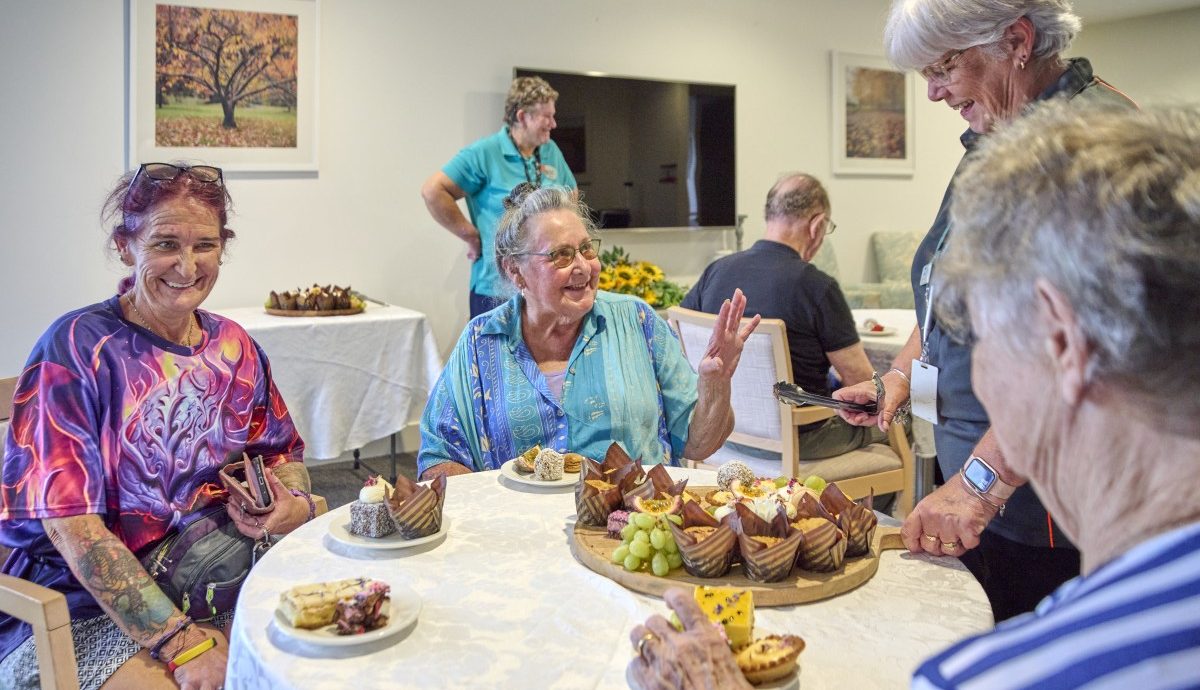
Our hospitality and clinical teams have focused heavily on re-imagining texture-modified presentation to preserve familiar shapes, vibrant colours, and rich flavours. By presenting these meals beautifully, we ensure that every resident feels included, respected, and valued at the shared dinner table. At Whiddon, we are proud to combine cutting-edge nutritional science with a heart-led care philosophy, proving that health oversight and the pure joy of food can always go hand in hand.
References
¹ Dyer S, et al. Interventions for preventing falls in older people in care facilities. Cochrane Database of Systematic Reviews 2025, Issue 8.
² Iuliano S, et al. Effect of dietary sources of calcium and protein on hip fractures and falls in older adults in residential care: cluster randomised controlled trial. BMJ. 2021 Oct 20;375:n2364.
³ Bryant, L. et al. Lupins and Health Outcomes: A Systematic Literature Review. Nutrients 2022, 14, 327; Jang, Y. J. et al. The Effects of Protein and Supplements on Sarcopenia in Human Clinical Studies. J Microbiol Biotechnol. 2023 Feb 28;33(2):143-150.