

What makes a good aged care home?
With a community of over 2,300 residents and clients, and a dedicated team of 3,000 employees, we have learned a lot about what makes a home truly special.
It’s a question families ask us often: “What makes a good aged care home?”
Finding the right residential aged care home for you or your loved one can feel very overwhelming. Taking time to research a care home to understand if it offers the right care and support that meets your needs is important. So is understanding the different elements that go into choosing a good aged care home.
From the care approach, wellbeing programs and food and dining experience, to allied health services and activities, there are many aspects to consider, that can help you make the right decision.
Top 4 things to look for when choosing a good aged care home
1. The care approach
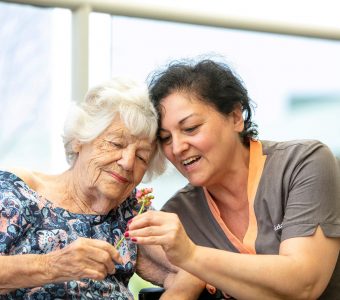
Great aged care is about more than just medical support. It is about feeling known, valued and understood. There is a view that all aged care is the same, but the best homes have a specific philosophy that prioritises seeing the person, not just the patient.
When visiting a home, look for evidence that the care team is focused on relationships rather than just a clinical checklist. At Whiddon, we call this Relationship Based Care. It ensures our team has the time to really understand each person and build deep relationships with them.
Here is what to look for:
- Personal Preferences: Does the home accommodate small but significant routines? For example, knowing that a resident prefers a coffee first thing in the morning, or likes to shower before bed rather than in the morning.
- Holistic Support: Good care extends beyond the physical. Look for a team that actively supports emotional, social and personal needs, understanding that a resident’s happiness is just as important as their medication chart.
- Meaningful Time: Do care workers have the time to stop and chat? You want to see employees who have the time to listen, learn individual stories and build deep relationships with the people they support.
2. Lifestyle and wellbeing programs
When looking for a good aged care provider, ask about their wellbeing programs and lifestyle activities. This is because good programs can offer a range of physical and emotional benefits to residents living in an aged care home. They also offer important opportunities for social connection and creative expression. This all plays an important role in the overall quality of care in the aged care home.
Participating in wellbeing programs can be very enjoyable and help to create a sense of purpose and community. Usually run by care workers or external partners, they’re a fantastic way to keep people connected while staying physically and mentally active. Participating in meaningful and purposeful activities and feeling part of a community are essential to your overall wellbeing.
- Beyond Bingo: Look for meaningful and purposeful activities rather than just time-fillers. At Whiddon, we offer creative ageing programs like Creature Comforts, music and storytelling.
- Connection: Do the programs encourage connection to the wider community? Keeping residents connected to the things that matter to them is a core part of our purpose.
- Accessibility: How readily can creative expression be made available to everyone? Whether it is through art, gardening or music, these programs help ensure residents remain engaged and happy every day.
3. The food and dining experience
Food is often the highlight of the day, but a good aged care home understands that it is about more than just nutrition. It touches on our memories, our culture and our sense of identity.
When evaluating a home’s dining, look for evidence that food is treated as an experience, not just a service:
- Connection and Memory: Does the menu reflect the residents’ lives? We know that the smell of a favourite meal can unlock powerful memories. Look for a team that takes the time to learn these stories and recreate family favourites, whether it is a specific pasta sauce or a prize-winning sponge cake.
- Fresh and Seasonal: Ask if the meals are cooked fresh on site. At Whiddon, we believe there is no substitute for a home-cooked meal prepared with fresh, seasonal ingredients. This approach ensures meals are full of flavour and nutrition, rather than being mass-produced or reheated.
- The Environment: Does the dining area feel clinical, or does it feel like home? We strive to create home-style kitchens and dining spaces where the sights and smells of cooking are part of the daily rhythm, stimulating the appetite and bringing people together.
- Participation: Are residents involved? Through initiatives like our Cooking Club, we invite residents into the kitchen to share recipes and cook alongside our chefs, keeping their culinary skills and passions alive.
4. Transparency, quality and safety
In Australia, the Aged Care Quality and Safety Commission assesses homes against the Strengthened Aged Care Quality Standards.
The easiest way to check this is through the Government’s Star Rating system. This rates homes from 1 to 5 stars based on four key areas:
- Compliance (Safety and standards)
- Residents’ Experience (Direct feedback from people living there)
- Staffing (Minutes of care per resident)
- Quality Measures (Clinical outcomes)
What a 5-Star Rating Looks Like: A 5-star rating, like the one achieved by our Whiddon Temora home, is difficult to obtain and indicates an ‘Excellent’ level of care. It means the home is performing at the top tier across all four categories.
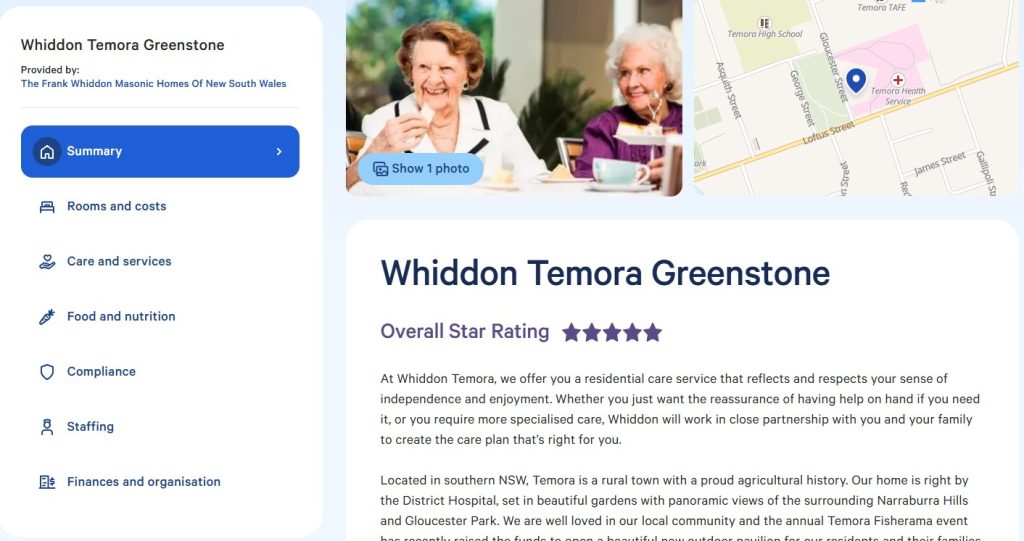
Always check the My Aged Care Find a Provider tool to see the current rating of any home you are considering.
Come and See the Whiddon Difference
Making this decision for a loved one is never easy, but knowing what to look for can give you confidence. After all, you deserve to feel certainty about the care your family will receive. Whiddon has 20 residential aged care homes across New South Wales and Southern Queensland, each offering well-being and lifestyle services, nursing and health care and dementia care services.
If you have more questions about what to look for or how to navigate the system, get in touch with our friendly team, who are always here to listen and offer advice.